

I. What is a slurry pump?
Definition: A slurry pump (Slurry Pump) is a centrifugal fluid machinery specifically designed for transporting liquid-solid two-phase/multi-phase slurry containing solid particles. Common media include mineral slurries, tailings, coal slimes, desulfurization gypsum slurry, riverbed sediment, metallurgical red mud, chemical black water, etc.
The fundamental difference from a water pump:
Dimensions:
清水 pump | Slurry pump
Medium:
Clean liquid | Liquid containing solid particles (concentration can reach over 60%, particle size ranging from mm to several tens of mm)
Flow components material:
Cast iron / stainless steel | High chromium alloy, rubber, polyurethane, ceramic coating, duplex steel, etc.
Hydraulic design:
High efficiency, high rotational speed | Wide flow channel, low rotational speed, anti-wear / anti-blockage blade type
Sealing requirements:
Conventional packing / mechanical seal | Auxiliary impeller + packing, modular mechanical seal, intelligent flushing system
Efficiency range:
70% - 90% | 50% - 75% (affected by solid friction and concentration)
II. Core structure and working principle
Working principle:
The motor drives the impeller to rotate, and the slurry gains kinetic energy and pressure energy under the centrifugal force. After expansion and pressure increase in the volute, it is discharged. Due to the presence of solid particles, the flow field exhibits strong unsteady multiphase flow characteristics, and the design needs to take into account both hydraulic efficiency and wear resistance life.
Key components:
Impeller / Guide Vane / Guard Plate: In direct contact with the slurry, determining wear resistance and throughput capacity
Shaft and Bearing Assembly: Bearinging the radial / axial loads, requiring high rigidity and anti-slurry intrusion design
Sealing System: Packing seal (low cost), auxiliary impeller power seal (no leakage), modular mechanical seal (high reliability)
Bracket / Base: Heavy-duty welded structure, resistant to vibration and thermal deformation
III. Classification and Scientific Selection Key Points
Common classifications:
Classification Dimension Type Applicable Scenarios
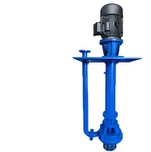
Installation Form Vertical (AH/HH/ZJ series) Mainstream in mines, metallurgy, and power plants
Horizontal/Underwater (SP series) Chamber suction, space limitation
Submersible (ZJQ) River dredging, tailings storage
Flow Material Metal pumps (Cr27/Cr30) High wear, large particles, high temperature
Rubber/Polyurethane pumps Medium and fine particles, strong corrosion, low noise
Ceramic/Composite Liner Extremely wear-prone + corrosion-resistant combined working conditions
Core Selection Parameters (All Must Be Included):
Flow (Q) | Head (H) | Slurry Volume Concentration (Cv) | Median Particle Size (d50) | Specific Gravity | pH Value | Temperature | Wear Index | Pipeline Characteristics
Common Misconceptions: Selecting only based on the performance curve for clear water; Ignoring the cavitation margin (NPSHr); Not leaving a 10% - 15% head margin; Not considering the impact of concentration fluctuations on shaft power (power ∝ concentration × specific gravity).
IV. Main Application Domains
Industry Typical Operating Conditions Key Requirements
Mining and Mineral Processing Grinding and classification, tailings transportation, filling High concentration, long distance, continuous operation
Power and Environmental Protection Wet desulfurization (limestone/gypsum slurry), ash and slag Resistant to corrosion, anti-scaling, low maintenance
Metallurgy and Chemical Industry Oxide alumina tailings, steel plant sludge, phosphorus chemical slag Strong alkali/strong acid, high temperature, strong adhesion
Dredging and Water Conservancy Stream dredging, land reclamation by dredging, sand transportation Through large particles, anti-blockage, flexible movement
Emerging Fields Deep-sea mining, lithium battery material slurry, solid waste resourceization Customization, cleanliness control, intelligence
V. Industry Status and Market Landscape
Global Market: Approximately 35-40 billion US dollars (2023), with a growth rate of 4% - 6%. European and American brands dominate the high-end market: Weir Minerals (Warman), Metso Outotec, KSB, Flowserve. Their advantages lie in material database, multiphase flow simulation, and full life cycle services.
Chinese Market: Capacity accounts for more than 40% of the global market. Industrial clusters are located in Shijiazhuang/Baoding, Shandong, Zhejiang. The price competition for the mid-to-low end is intense, while the acceleration of domestic substitution for high-end products (such as Shijiazhuang Industrial Pump Factory, Shandong Zhanggu, Kaiquan, Liancheng, Zigong Industrial Pump, etc.) is evident. Export is significantly driven by the "Belt and Road Initiative" in the mining and infrastructure sectors.
Business Model Evolution: From "single machine sales" to "EPC + spare parts subscription + condition monitoring + predictive maintenance" service-oriented manufacturing.
VI. Key Technologies and Development Trends
Material Breakthroughs: Microalloying of high-chromium cast iron (V/Ti/Nb to refine carbides), duplex stainless steel resistant to chloride ion corrosion, 3D printing gradient wear-resistant layer, replaceable modular linings.
Hydraulic Design: Coupled simulation of CFD-DEM for solid-liquid two-phase flow; anti-erosion/anti-wear composite blade type; adjustable impeller gap technology (online compensation for wear).
Sealing Upgrade: Dry gas seal in pilot application for high-pressure slurry pumps; intelligent flushing system (closed-loop control of flow/pressure/water quality).
Intelligence: Online monitoring of vibration + temperature + acoustic emission; digital twin for life prediction; variable frequency speed matching with fluctuating operating conditions; IE4/IE5 high-efficiency motor integration.
Green and Low-Carbon: Low-speed long-life design to reduce the carbon footprint throughout the life cycle; recyclable composite materials; system energy efficiency optimization (pump + pipeline + variable frequency overall matching).
VII. Industry Pain Points and Challenges
Life and Cost Contradiction: In high-maintenance conditions, the lifespan of flow components is only 3-6 months, and the downtime for replacement is much greater than the cost of spare parts.
Selection Data Distortion: Fluctuations in on-site slurry parameters, resulting in deviations between laboratory data and actual conditions, leading to cavitation, blockage, and efficiency collapse.
Standard Fragmentation: Coexistence of ANSI/HI 12, ISO 13709, GB/T 28163, etc., with poor interchangeability of interfaces and spare parts.
Low-price Internal Competition: Some enterprises use ordinary cast iron to imitate high-chromium and reduce wall thickness to lower prices, damaging the industry's reputation.
Shortage of Composite Talents: There is a scarcity of engineers who understand hydraulic design, material science, on-site processes, and fault diagnosis.
Detailed Explanation of Slurry Pump Products
Apr 28, 2026



Send Inquiry