

The power consumption of a sump slurry pump is a critical factor that impacts both operational efficiency and cost - effectiveness. As a supplier of sump slurry pumps, understanding these power - related aspects is essential for guiding our customers to make informed decisions.
Factors Affecting Power Consumption
Flow Rate
The flow rate, measured in cubic meters per hour (m³/h) or gallons per minute (GPM), is directly proportional to the power consumption of a sump slurry pump. A higher flow rate requires more energy to move the slurry through the system. For instance, if a pump is required to transfer a large volume of slurry in a short period, it has to work harder, which means it will draw more power. Consider a scenario where a mining operation needs to transport a large quantity of ore - laden slurry from a sump to a processing unit. A pump with a high - flow capacity will consume more power compared to one operating at a lower flow rate for a less demanding application.
Head
The head refers to the height or pressure against which the pump has to work to move the slurry. It includes both the static head (vertical distance the slurry has to be lifted) and the friction head (resistance in the pipes). The greater the head, the more power the pump needs. For example, if a sump slurry pump has to lift the slurry to a higher elevation or push it through a long and narrow pipeline with many bends, the power consumption will increase significantly. In an industrial plant where the slurry needs to be pumped to the top of a tall storage tank, the pump will need extra power to overcome the high static head.
Slurry Density
Slurry density is another crucial factor. A denser slurry contains more solid particles per unit volume, which makes it heavier and more viscous. As a result, the pump has to work harder to move this denser fluid. For example, in a coal - washing plant, the slurry with a high concentration of coal particles will require more power to pump compared to a less dense slurry. The power consumption can increase linearly with an increase in slurry density, especially when the density is above a certain threshold.
Pump Efficiency
The efficiency of the pump itself plays a vital role in power consumption. A more efficient pump can convert a higher percentage of the input power into useful work (moving the slurry). Modern sump slurry pumps are designed with advanced impeller and casing geometries to improve efficiency. For example, our Vertical Centrifugal Slurry Pump is engineered with precision to ensure maximum efficiency. By using high - quality materials and advanced manufacturing techniques, we can reduce internal losses, such as friction and leakage, which in turn lowers the power consumption.
Calculating Power Consumption
The power consumption of a sump slurry pump can be estimated using the following formula:
[P=\frac{\rho\times g\times Q\times H}{\eta\times 1000}]
Where:

- (P) is the power consumption in kilowatts (kW)
- (\rho) is the density of the slurry in kilograms per cubic meter (kg/m³)
- (g) is the acceleration due to gravity ((9.81 m/s^{2}))
- (Q) is the flow rate in cubic meters per second (m³/s)
- (H) is the head in meters (m)
- (\eta) is the pump efficiency (expressed as a decimal)
Let's take an example. Suppose we have a sump slurry pump with a flow rate (Q = 0.1 m³/s), a head (H = 20 m), a slurry density (\rho=1200 kg/m³), and a pump efficiency (\eta = 0.8).
First, we substitute the values into the formula:
[P=\frac{1200\times9.81\times0.1\times20}{0.8\times1000}]
[P=\frac{1200\times9.81\times2}{8}]
[P = 294.3 kW]
This calculation gives us an approximate power consumption. However, in real - world applications, there are additional factors such as motor efficiency, which can further affect the actual power drawn from the electrical supply.
Different Types of Sump Slurry Pumps and Their Power Consumption
Open Impeller Slurry Pump
The Open Impeller Slurry Pump is known for its ability to handle large solid particles. It typically has a relatively simple design, which can lead to different power consumption characteristics. The open impeller design allows for better passage of solids, but it may have lower efficiency compared to some other designs. As a result, for a given flow rate and head, an open impeller slurry pump may consume more power. However, in applications where large - sized solids are present, the benefits of using this type of pump often outweigh the slightly higher power consumption.
Vertical Slurry Sump Pump
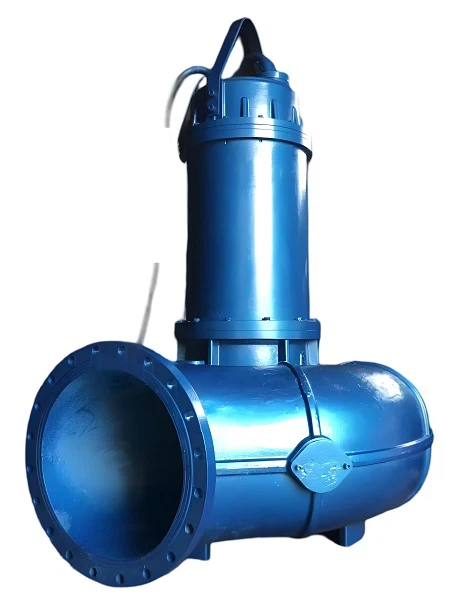
Our Vertical Slurry Sump Pump is designed to operate in sumps with limited space. It has a vertical shaft, which allows it to be installed directly into the sump. The vertical design can reduce the need for long horizontal pipes, which in turn can reduce the friction head and potentially lower the power consumption. Additionally, these pumps are often designed with high - efficiency impellers to minimize power usage. In applications such as wastewater treatment plants where space is at a premium, the vertical slurry sump pump can provide an energy - efficient solution.
Strategies to Reduce Power Consumption
Proper Sizing
One of the most important strategies is to properly size the pump for the application. An oversized pump will operate at a lower efficiency point and consume more power than necessary. On the other hand, an undersized pump may not be able to meet the required flow rate and head, leading to inefficiencies and potential damage to the pump. By accurately calculating the flow rate, head, and slurry characteristics, we can select the most appropriate pump size for our customers.
Variable Frequency Drives (VFDs)
VFDs can be used to control the speed of the pump motor. By adjusting the motor speed according to the actual demand, we can significantly reduce power consumption. For example, if the flow rate requirement decreases during certain periods of operation, the VFD can slow down the pump motor, reducing the power draw. This is especially useful in applications where the demand for slurry transfer varies over time, such as in some chemical processing plants.
Regular Maintenance
Regular maintenance of the sump slurry pump is essential to ensure optimal efficiency. This includes checking and replacing worn - out parts, such as impellers and seals, cleaning the pump and pipes to reduce friction, and aligning the pump and motor properly. A well - maintained pump will operate more efficiently, consuming less power.
Conclusion
Understanding the power consumption of sump slurry pumps is crucial for both our company as a supplier and our customers. By considering factors such as flow rate, head, slurry density, and pump efficiency, we can accurately estimate the power requirements and select the most suitable pump for each application. Different types of pumps, such as the Vertical Centrifugal Slurry Pump, Open Impeller Slurry Pump, and Vertical Slurry Sump Pump, have their own power - consumption characteristics. By implementing strategies such as proper sizing, using VFDs, and regular maintenance, we can help our customers reduce power consumption and lower their operating costs.
If you are interested in learning more about our sump slurry pumps or need assistance in selecting the right pump for your application, we encourage you to contact us for a detailed discussion. Our team of experts is ready to provide you with the best solutions tailored to your specific needs.
References
- "Pump Handbook" by Igor J. Karassik et al.
- "Centrifugal Pumps: Design and Application" by Stepanoff, A. J.


