esign, Materials and Manufacturing: The Technological Leap in China's Pump Industry (Part 3 of 3)
As the world's information revolution swept the globe and China's economy grew rapidly in the new century, China's pump industry made enormous progress in design and drafting technology, smelting and casting technology, manufacturing technology and pump testing technology.
Design and Drafting
In design and drafting, computers are now ubiquitous in Chinese pump companies, whether large or small, among senior and middle management, and on the factory floor and in the workshop. In pump technology and design departments, CAD drafting is also widespread and mastered by engineers at large; today it is hard to find a drafting board or a T-square. Drafting efficiency has greatly improved, drawings are neat and clean, and the tracing step has been eliminated entirely.
In vane pump design, the similarity method, the one-dimensional streamline method and the lifting-surface method - unchanged for decades - have also changed in the new century. They now serve only for preliminary design, and new design methods have followed: inverse design, the controllable velocity moment method and optimization design, adopted by many engineers.
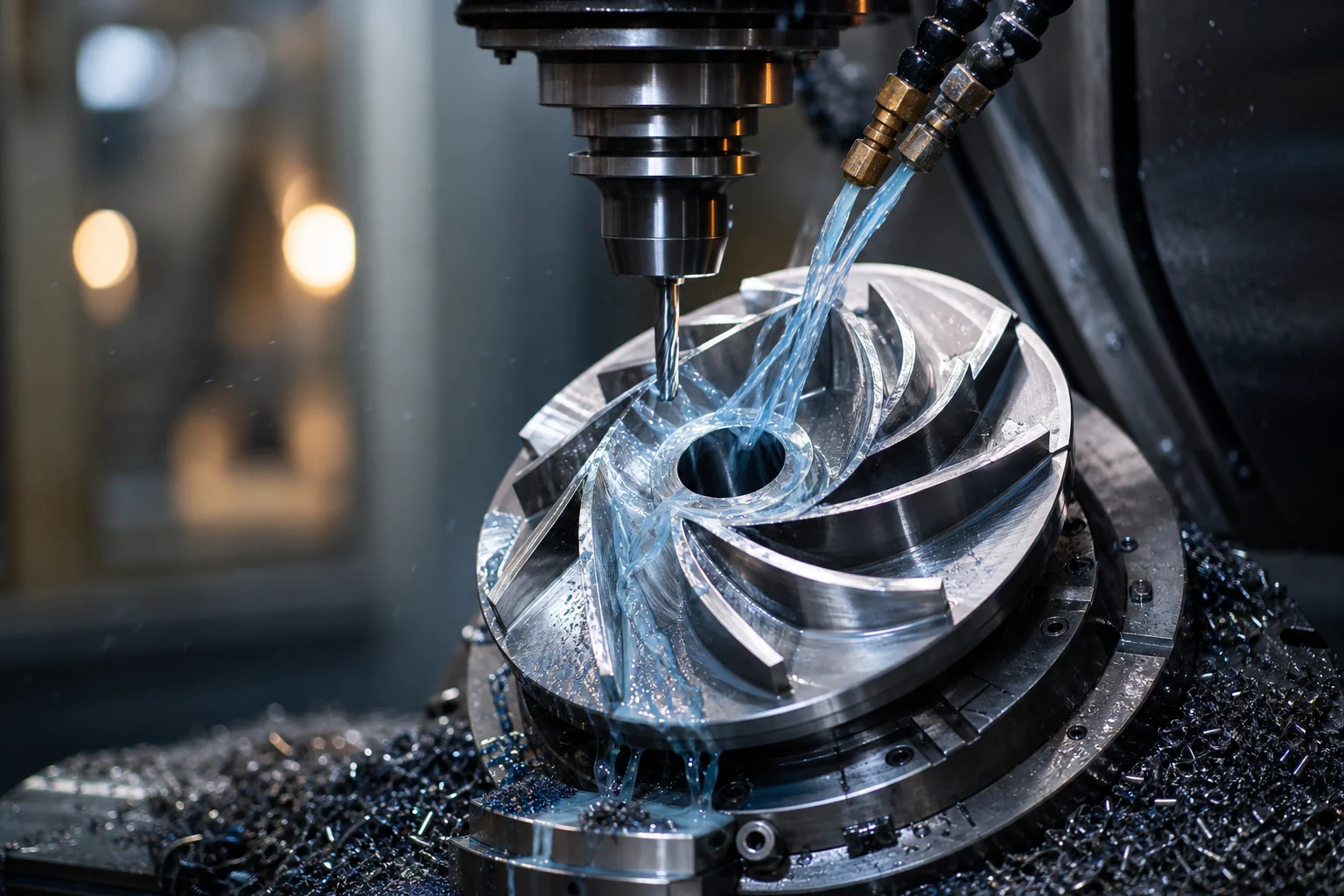
In recent years, vane pumps for all kinds of applications have been developing rapidly toward efficient, advanced hydraulic and structural design. Some pumps face severe space or installation-dimension constraints; some need only to meet performance requirements at the best efficiency point; some must satisfy multiple operating points or a specific full head curve; and some must extend the high-efficiency range as far as possible. This has prompted companies to adopt commercial design, research and simulation software such as CN and CFX. Integrating years of design, application and testing experience, such software optimizes the design and calculates the geometric dimensions of the pump's fluid-handling components. These three-dimensional hydraulic models generate meshes automatically, select a suitable turbulence model from the most advanced and mature options, and perform CFD and FEA analysis and data processing. The whole process is fast, concise and relatively reliable. An impeller NC machining programming module can then rapidly simulate impeller machining, check for possible design defects and help improve the design. A laser rapid prototyping machine can also be used to produce impeller models for direct investment casting with minimal machining. In short, the entire design, machining and development cycle has been greatly shortened. This digital, information-based and modernized design approach has brought enormous progress to vane pump design and manufacturing.
Testing Technology
In pump testing, automated control of test rigs over the past 15 years has enabled synchronous data acquisition and control of flow, head, power and speed. Computer-based automatic monitoring and control handles actual data processing, curve plotting and accuracy analysis, greatly improving work efficiency and effectively raising measurement accuracy. China's pump industry has made great progress here and achieved modernization. This represents progress in macroscopic pump testing; at the microscopic level - that is, in measuring the internal flow field of pumps - some pump companies have also carried out LDV or PIV measurements of internal flow.
In recent years, some Chinese pump companies, such as Shenyang Blower Works Group Nuclear Power Pump Co., Ltd., have attached great importance to basic testing and research in fluid mechanics, thermodynamics, structural mechanics and rotor dynamics. Since 2011, the company has been carrying out the National Science and Technology Support Program project on applied fundamentals of mechanical seals for high-parameter pumps, and a National 973 Program project on the basic scientific problems of mechanical equipment remanufacturing.
New Materials, Smelting and Casting
China's pump industry also made breakthroughs in the new century in smelting, casting and heat treatment of new materials. The "water-jet propulsion pump and its SS2377 ultra-low-carbon duplex stainless steel precision castings," developed by Tianmen Pump Co., Ltd., passed a national-level defense science and technology achievement appraisal in Wuhan. Water-jet propulsion units are widely used in high-speed naval vessels, and their material is ultra-low-carbon duplex stainless steel. The smelting, casting and solution heat treatment of this material is a recognized worldwide challenge, mastered by only a few countries such as Sweden, Japan and the United States. Starting with the development of all the ultra-low-carbon duplex stainless steel precision castings for the D970 water-jet propulsion pump and its unit, the company trial-produced a series of precision castings including guide vanes, impellers and casings. It mastered the integral forming technology for spatially twisted, complex, thin-walled airfoil guide vanes using precision resin sand casting, so that the cast blade airfoils require no machining. Using casting simulation software to optimize the casting process, it developed step gating, high-temperature shakeout and other process methods that effectively prevented casting defects. It successfully produced the SS2377 ultra-low-carbon duplex stainless steel precision castings for the D970 water-jet propulsion pump and unit, achieving optimized control of the ferrite-to-austenite phase ratio and the solution heat treatment temperature. Its metallographic structure, intergranular corrosion resistance, mechanical properties, radiographic inspection and hydrostatic tests were all verified by third-party testing institutions and approved by the China Classification Society. The first 5,000 kW single-pump water-jet propulsion unit has been successfully applied on a naval high-speed trimaran search-and-rescue vessel for China National Petroleum Corporation's offshore emergency rescue operations.
Manufacturing Technology
In manufacturing, pump companies - especially key backbone enterprises - have comprehensively improved their overall strength over the past five years, introducing CNC machine tools in batches and phasing out old machines. To meet the high-precision machining requirements of pumps for nuclear and thermal power, they have imported boring and milling machining centers. Shanghai Kaiquan, for example, has imported from abroad a German nine-axis, five-linkage floor-type boring and milling machining center; an Italian six-axis, five-linkage machining center; a German six-axis, five-linkage gantry boring and milling machining center; an Italian 4 m heavy-duty high-precision vertical turning and milling center; and an Italian 2.5 m heavy-duty high-precision vertical turning and milling center. These advanced machine tools have comprehensively raised machining capacity and manufacturing levels.
With the rapid development of manufacturing technology, the long-standing situation in which China's pump industry remained at the middle and low end of design and manufacturing while relying on imports for a large number of high-end products has been broken. In recent years, the launch of major projects - the South-to-North Water Diversion, the West-to-East Gas Pipeline, large thermal power, petrochemical, nuclear power and national defense projects - and in particular the localization of the first units of nuclear power pumps and the design and manufacture of naval vessel water-jet pumps, have driven major progress in China's high-end pump design and manufacturing. Both the level and the quality of products have improved considerably, and a large number of new products with independent intellectual property rights have been developed. Class 2 and Class 3 nuclear power plant pumps have essentially been localized, breaking foreign technological blockades and market monopolies. The localization rate of nuclear power pumps has now reached more than 75 percent.
The charging pump developed by Chongqing Pump Works Co., Ltd. operates with a vibration value less than half the value specified in the technical specifications; its operating stability and reliability are superior to foreign products, its technical performance meets the requirements for million-kilowatt pressurized water reactor nuclear power plants, and it has reached the advanced level of comparable international products.
Shanghai Power Equipment Manufacture and Repair Works Co., Ltd. has successfully localized the million-kilowatt conventional island booster pump, conventional island main feedwater pump and circulating water pump. The localization rate of nuclear-grade pumps has risen from 5 percent six years ago to more than 75 percent today.
In high-end pumps, million-kilowatt ultra-supercritical boiler feedwater pumps, long-distance oil pipeline pumps (above 2,000 kW), chemical process pumps and high-speed pumps have also been localized.
The enormous technological progress of China's pump industry has brought a continuous stream of new products over these 15 years, unprecedented in the history of the industry. All of these products were independently designed and developed - for example, the water-jet propulsion pump and unit with a single-unit drive power of 5,000 kW, designed and manufactured by the Marine Design and Research Institute of China; the feedwater pump cartridge for 600 MW supercritical units produced after 2008, and the boiler feedwater pump for 1,000 MW ultra-supercritical thermal power units developed and produced by Shanghai Power Equipment Manufacture and Repair Works Co., Ltd. in 2012; the third-generation double-cylinder, double-acting diaphragm pump successfully developed through independent innovation by China Nonferrous (Shenyang) Pump Co., Ltd.; the multistage cryogenic liquid oxygen pump and high-pressure ammonium carbamate pump successfully developed by Dalian Shenlan Pump Co., Ltd.; and the LC900/1150 circulating pump for flue gas desulfurization in 1,000 MW thermal power units, successfully developed by Xiangyang 525 Pump Co., Ltd.
Four Further Indicators of Progress
China's pump technology progress is also reflected in four other ways.
First, the replacement cycle for the industry's high-volume, wide-ranging older products - such as single-stage centrifugal pumps and double-suction centrifugal pumps - has been greatly shortened, and the efficiency of complete series has improved considerably, placing them almost on a par with world pump efficiency levels.
Second, mechanical seals have become standard on vane pumps. The vast majority of new pumps today use mechanical seals, often cartridge-type seals assembled at the factory.
Third, aluminum bronze as a material for seawater pumps has been replaced by high-alloy ultra-low-carbon austenitic stainless steel and ultra-low-carbon duplex stainless steel.
Fourth, pump selection software is now used in pre-sales service, speeding up the pump selection process.