



Products Description
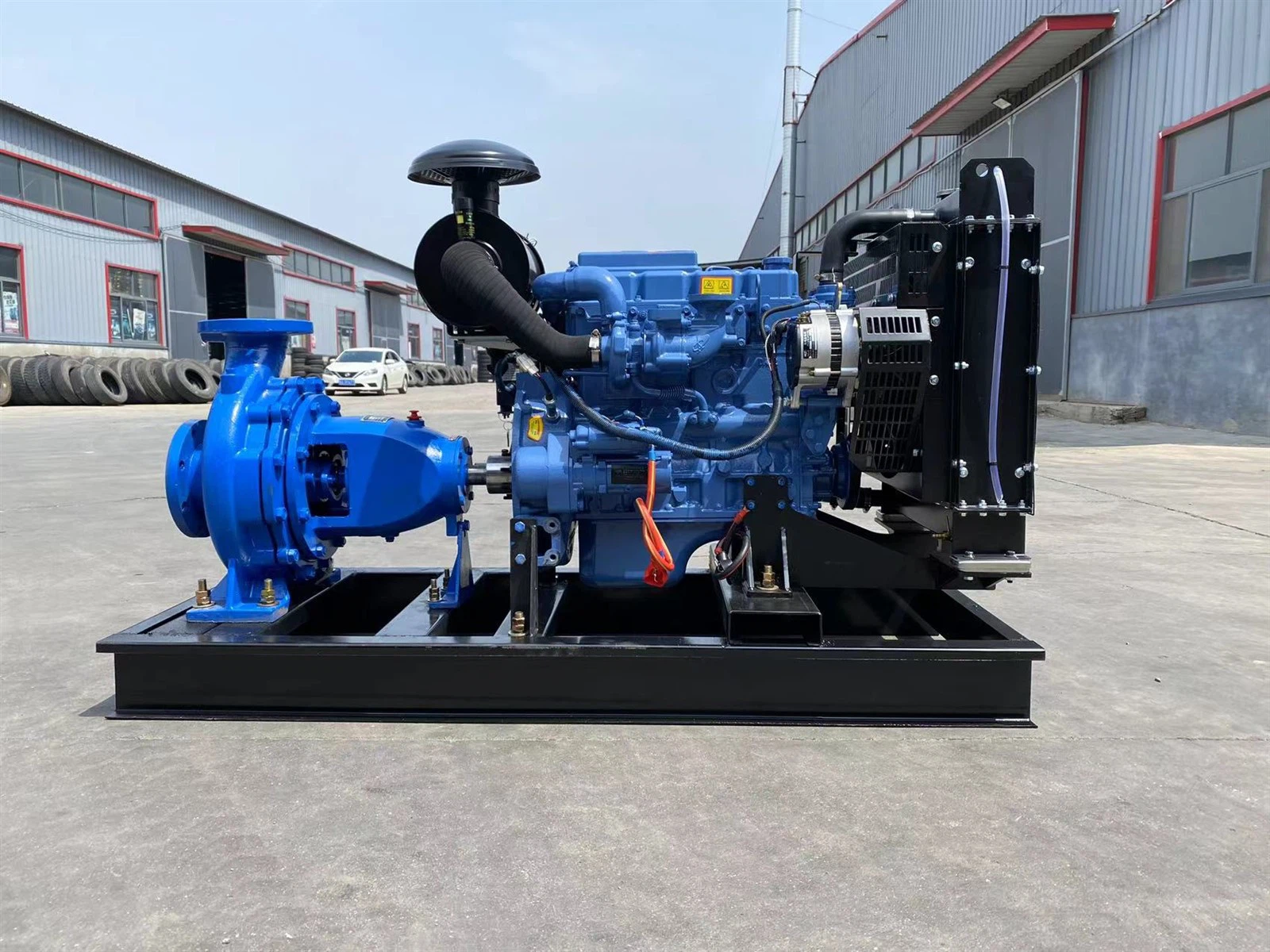
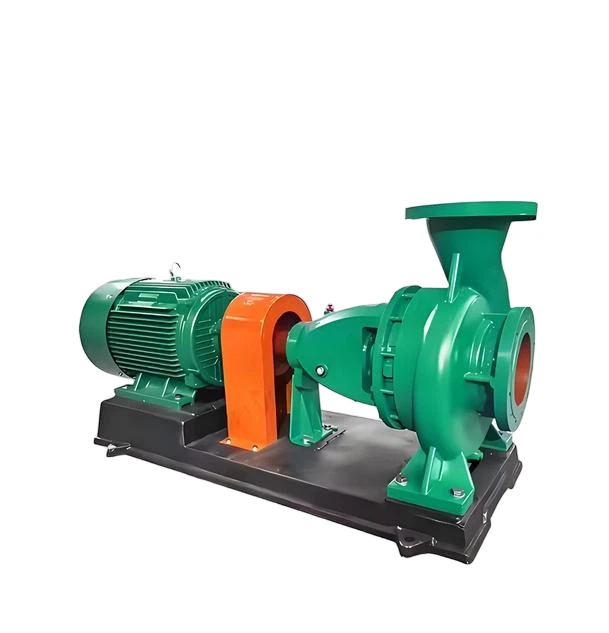
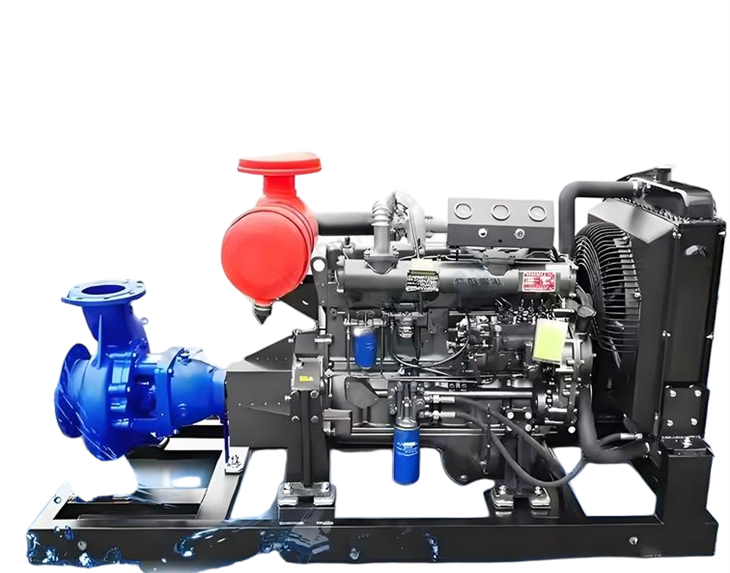
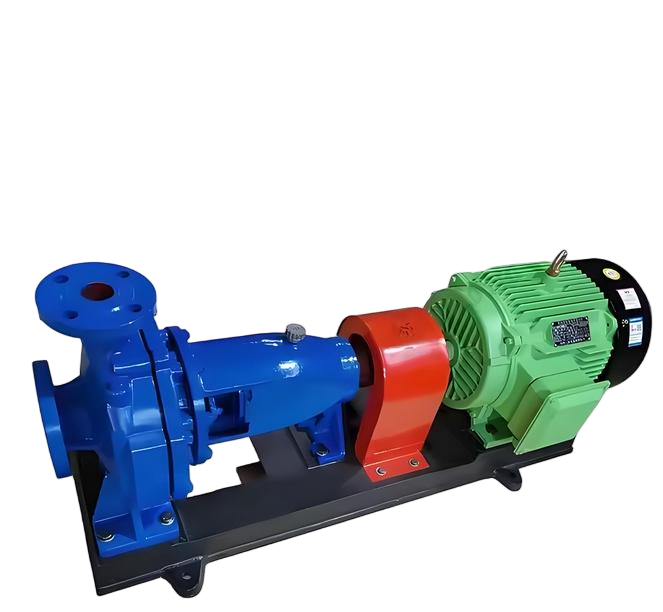
Cast Iron End Suction Pump for HVAC, Industrial Water Treatment The main performance parameters of a centrifugal pump are the impeller diameter, flow rate, power and efficiency. The relationship between these parameters can be determined through experiments. The production department of centrifugal pumps represents the basic performance parameters of their products using curves, which are called the characteristic curves of centrifugal pumps. These curves are provided for the reference of the using departments when selecting pumps and operating them.
Cast Iron End Suction Pump for HVAC, Industrial Water Treatment
The characteristic curve was measured at a fixed rotational speed and is only applicable to that speed. Therefore, the value of rotational speed n is indicated on the characteristic curve graph. The graph shows the characteristic curve of the Grundfos NK series horizontal suction centrifugal pump at n = 1450 r/min. Three curves are plotted on the graph:
Cast Iron End Suction Pump for HVAC, Industrial Water Treatment
H-Q Curve
The H-Q curve represents the relationship between the pump's flow rate Q and pressure head H. For centrifugal pumps, the pressure head decreases as the flow rate increases within a certain range. The shapes of the H-Q curves for different types of centrifugal pumps vary. Some curves are relatively flat and are suitable for situations where the pressure head changes little but the flow rate changes significantly; others are steeper and are suitable for situations where the pressure head changes widely but the flow rate cannot change too much.
2. N-Q Curve
The N-Q curve represents the relationship between the pump's flow rate Q and the shaft power N. The N value increases as the Q value increases. Clearly, when Q is 0, the power consumed by the pump shaft is the minimum. Therefore, when starting a centrifugal pump, in order to reduce the starting power, the outlet valve should be closed.
3. η-Q Curve
The η-Q curve represents the relationship between the pump's flow rate Q and efficiency η. Initially, η increases as Q increases, reaches its maximum value, and then decreases as Q increases. The maximum value of this curve corresponds to the highest efficiency point. The pump operates at this point with the corresponding head and flow rate, achieving the highest efficiency. Therefore, this point is the design point of the centrifugal pump. When selecting a pump, it is always desired that the pump operates at the highest efficiency, as this operation is the most economical and reasonable. However, in reality, the pump is often not able to operate exactly under these conditions. Therefore, a working range is usually specified, known as the high efficiency zone of the pump. The efficiency in the high efficiency zone should be no less than 92% of the highest efficiency. The flow rate, head, and power indicated on the pump nameplate are all at the highest efficiency. Centrifugal pump product catalogs and instructions often also indicate the range of flow rate, head, and power in the highest efficiency zone. 0
2.The influence of the rotational speed of the centrifugal pump on the characteristic curve
The characteristic curve of a centrifugal pump is determined under a certain rotational speed. When the rotational speed changes from n1 to n2, the approximate relationship between the flow rate, head and power is called the proportionality law. When the change in rotational speed is less than 20%, it can be considered that the efficiency remains unchanged, and the above formula can be used for calculation.
3.The influence of impeller diameter on the characteristic curve
When the diameter of the impeller does not change much and the rotational speed remains constant, the approximate relationship among the impeller diameter, flow rate, head and power is called the cutting law.
In conclusion, the characteristic curves of centrifugal pumps (H-Q, N-Q, η-Q curves) are the core tools for understanding and selecting pumps. They not only reveal the intrinsic relationship between flow rate, head, power, and efficiency, but also provide us with theoretical basis for adjusting pump performance through the "proportion law" and "cutting law". Mastering the characteristic curves means being able to select the most suitable pump type for the system, determine the efficient working range, and thus achieve safe, economic and efficient operation.

Hot Tags: cast iron end suction pump for hvac, industrial water treatment, China cast iron end suction pump for hvac, industrial water treatment manufacturers