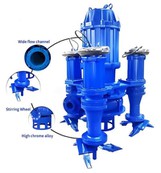
Products Description


I. Before Maintenance: Safety and Preparation Are the Foundations
Complete power and water disconnection:
Turn off the main power switch of the pump and lock it, and hang a sign saying "Maintenance in Progress - Do Not Close Switch"; Close the inlet and outlet water valves, drain the residual liquid in the pump body to prevent leakage or electric shock.
Prepare tools and spare parts:
Prepare the appropriate wrenches, screwdrivers, seals (such as O-rings, mechanical seals), lubricants, etc. in advance to avoid interruption of operations due to tool shortages during maintenance and to maintain efficiency.
Record the original state:
Take photos or write down the connection method of the pump, the position of the components (such as the direction of the impeller, the pipe interface), especially for unfamiliar models to avoid incorrect assembly.
II. During Maintenance: Disassembly and Inspection Are the Core
Disassembly follows the principle of "from outside to inside":
First, remove the motor connection lines and inlet and outlet water pipelines, then disassemble the pump end cover, impeller, bearings and other internal components to avoid damaging the threads or sealing surfaces due to violent disassembly.
Focus on checking vulnerable components :
Sealing system:
Check whether the moving and stationary rings of the mechanical seal are worn or cracked, and whether the O-ring is aged or deformed. This is crucial for preventing water leakage.
Rotating components:
Turn the impeller by hand to feel if there is any jamming or abnormal noise. Check if the impeller is corroded, damaged or if the clearance of the impeller flange is too large (excessive clearance will reduce the pump efficiency).
Bearings and shafts:
Check if the bearings are rusted or if the balls are worn. Check if the shaft is bent or has any wear marks. If the shaft runout exceeds the standard, it needs to be corrected or replaced in time.
Cleaning components to avoid impurities:
After disassembling the components, clean them with kerosene or special cleaning agents, especially the bearing housing, sealing chamber and other parts. Prevent residual impurities from causing wear on the new components.
III. After Maintenance: Assembly and Testing are Essential
Reassemble according to the original records in reverse order:
Ensure that all components such as the impeller and seals are installed correctly, and the bolts are evenly tightened (to prevent the pump body from deforming due to excessive local stress) based on the records during disassembly.
Add the appropriate lubricating oil:
Add an appropriate amount of lubricating oil (such as 32 or 46 type mechanical oil) to the bearing housing. The oil level should be at 1/2 - 2/3 of the oil gauge. Excessive or insufficient oil will affect the heat dissipation and lubrication of the bearings.
No-load and load tests :
No-load test: After powering on, let the pump run idle for 1-2 minutes. Check if the motor rotation direction is correct, if there are any abnormal sounds, and if the vibration is normal.
Load test: Open the inlet and outlet water valves. Observe whether the pump's water pressure and flow rate meet the standards. At the same time, check if there is any leakage at the sealing area. Run for 30 minutes and touch the bearing seat. The temperature should not exceed 70℃ for it to be normal.
Heavy-Duty Double Suction Centrifugal Pump for Sewage Treatment In terms of advantages and disadvantages, the advantages are definitely large flow, stable head, small axial force, and convenient maintenance. The disadvantages might be large size, heavy weight, possibly lower efficiency compared to single-suction pumps, and high requirements for installation accuracy. We need to balance these advantages and disadvantages to enable users to understand the applicable scenarios.
In terms of application fields, they should include water supply and drainage, agricultural irrigation, power stations, chemical plants, sewage treatment, etc. In these fields where large flow rates are required, double-suction pumps are more suitable. Perhaps some specific examples could be given as well, such as urban water supply systems and the circulating pumps in power plants.
Heavy-Duty Double Suction Centrifugal Pump for Sewage Treatment
In the section on selection considerations, it is necessary to remind users to take into account factors such as flow rate, head, medium characteristics, installation conditions and efficiency. In particular, the temperature and corrosiveness of the medium, as well as the size of the installation space, all of these will affect the selection. It may also be necessary to mention standards and certifications, such as ISO and API, to ensure the quality of the pump.
It is necessary to check if there are any omitted parts, such as the classification of double-suction pumps, whether there are different types, such as horizontal and vertical? Or are there any other variations? Additionally, it is necessary to compare the differences between double-suction pumps and single-suction pumps to help users better understand. Also, pay attention to using simple and understandable language, avoiding too many professional terms, or explaining the terms when necessary.
The users might be engineers, procurement staff or students, and they require detailed but clear information. If it's an engineer, they might be more concerned about technical parameters and application scenarios; if it's a student, they might need basic principles and structure. Therefore, the content should be comprehensive, covering different levels of requirements. Finally, ensure the structure is clear, with points clearly defined, to facilitate user reading.
Heavy-Duty Double Suction Centrifugal Pump for Sewage Treatment for Sewage Treatment double-suction pump is a highly efficient and stable centrifugal pump, widely used in scenarios involving large flow rates and medium to low head for liquid transportation. The following provides a detailed introduction from aspects such as working principle, structural features, advantages and disadvantages, application fields, and selection precautions:

Hot Tags: heavy-duty double suction centrifugal pump for sewage treatment, China heavy-duty double suction centrifugal pump for sewage treatment manufacturers, split casing water pump for renewable energy industry, medium pressure split casing water pump, large capacity split casing water pump, split casing water pump for brazing, corrosion resistant split casing water pump, split casing water pump for geothermal power plants