
Introduction
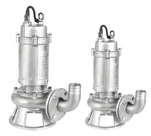
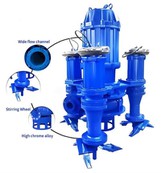
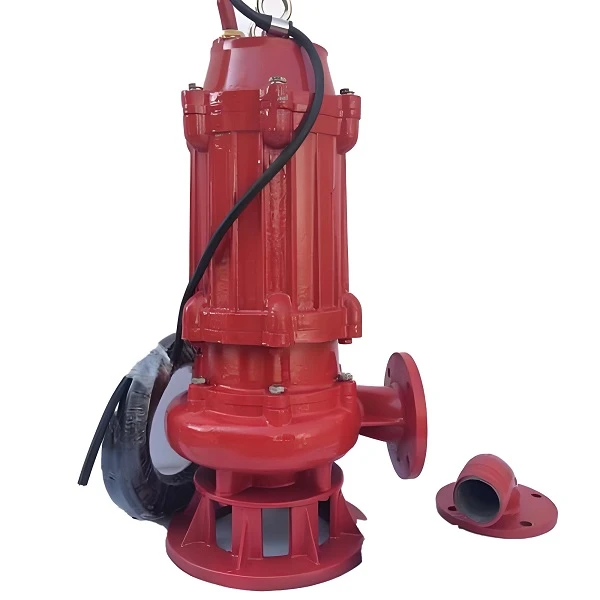
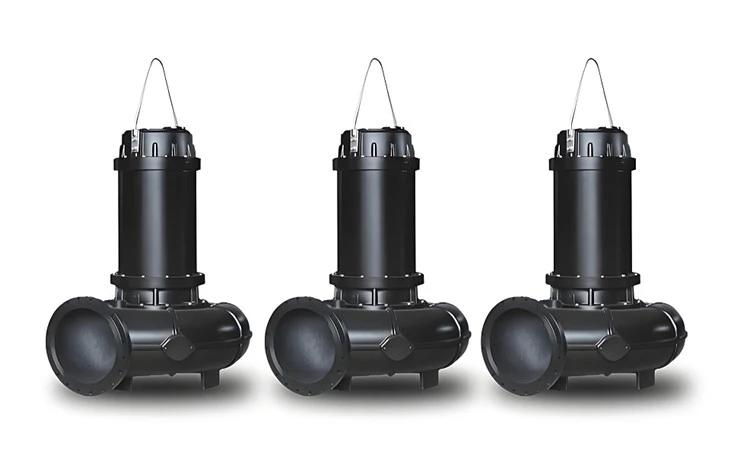
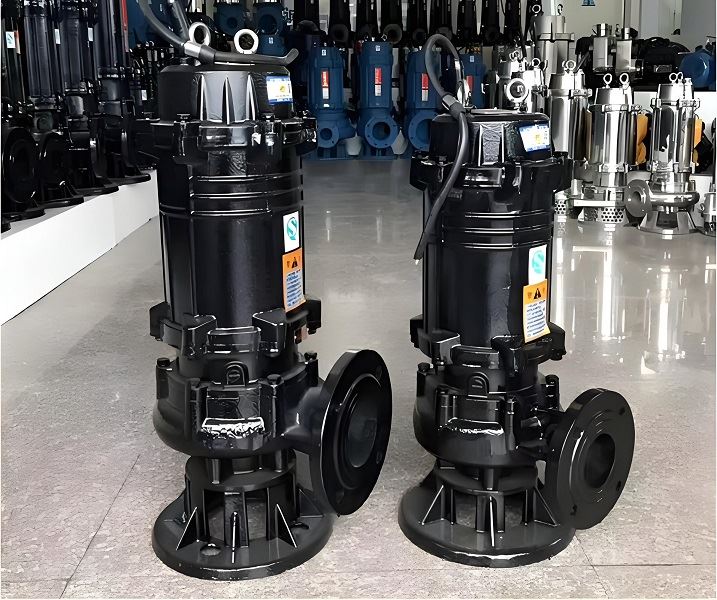
Submersible dirty water pump is primarily used for transporting urban sewage, feces, or liquids containing solid particles such as fibers and paper scraps. The temperature of the conveyed medium is typically no higher than 80°C.
Due to the presence of fibers in the medium-which are prone to entanglement or clumping-the pump's flow channel is susceptible to clogging. If clogged, the pump will fail to operate properly and may even burn out the motor, leading to poor drainage. Such failures severely impact urban life and environmental protection. Therefore, anti-clogging performance and reliability are critical quality indicators for sewage pumps.
To address this, urban sewage treatment systems often include a filter screen installed in front of the pump's suction port. This screen prevents fibrous entanglements and debris from entering the pump chamber, improving performance and extending the pump's lifespan.
Structure of Sewage Pumps
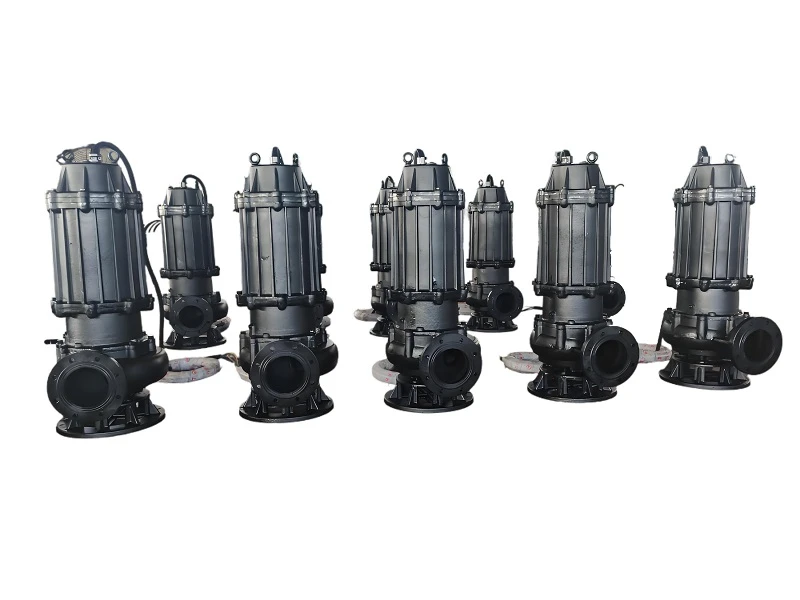
The sewage pump shares the same basic structure as other pumps, with the impeller and pressure chamber serving as its two core components. These parts determine the pump's overall performance, including its anti-clogging capability, efficiency, cavitation resistance, and abrasion resistance.
Below are four common impeller designs:
1. Blade-Type Impeller (Open or Closed)
Open/semi-open impellers are easy to manufacture and allow for simple cleaning and repairs when clogged.
However, prolonged operation leads to increased clearance between the blades and the pressurized water chamber's side walls due to particle abrasion. This reduces efficiency and disrupts pressure distribution on the blades, generating vortex losses and increasing axial force.
The unstable flow within the channel may also cause pump vibration.
Limitations: Poor performance with large particles or long fibers; efficiency is ~92% of closed impellers. The head curve is relatively flat.
2. Swirl Impeller
Part or all of the impeller retracts from the pressure chamber's flow channel, enhancing anti-clogging performance and allowing better passage of particles/long fibers.
Particles are propelled by vortices rather than direct blade contact, minimizing wear and maintaining efficiency over time.
Limitations: Lower efficiency (~70% of closed impellers); flat head curve.
Best for: Media with large particles or long fibers.
3. Closed Impeller
Offers higher efficiency and stable long-term operation.
Smaller axial force; may include auxiliary blades on the front/rear cover plates:
Front blades reduce vortex loss and seal-ring wear.
Rear blades balance axial force and protect the mechanical seal from particles.
Limitations: Poor anti-clogging performance; prone to fiber wrapping. Unsuitable for untreated sewage with large particles.
4. Flow Channel Impeller (Bladeless Design)
Features a curved flow channel from inlet to outlet, ideal for large particles/long fibers.
Advantages: High anti-clogging performance; efficiency comparable to closed impellers.
Limitations: Steep head curve decline; weaker cavitation resistance (especially in pressurized inlet pumps).
5. Spiral Centrifugal Impeller
Combines features of centrifugal and positive displacement pumps. Its twisted spiral blades (on a conical hub) minimize particle contact, reducing damage to conveyed materials.
Advantages:
Excellent non-destructive performance for delicate media (e.g., high-concentration slurries).
Strong particle/fiber passability.
Performance: Steep head curve; flat power curve.


Hot Tags: submersible dirty water pump, China submersible dirty water pump manufacturers, sewage pumps, submersible sewage drainage pump, Submerged Underground Water Fecal Pump, wear resistant submersible sewage pump, Electric Trash Submersible Cutter Pump, Electric OEM Centrifugal sewage Pump