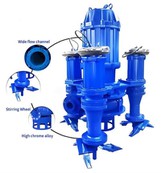
Products Description

CDL/CDLF is a multifunctional product that can convey various different media ranging from tap water to industrial liquids. It is suitable for different temperature, flow and pressure ranges. CDL is applicable to non-corrosive liquids, while CDLF is suitable for slightly corrosive liquids.
1. Water supply: Water treatment and transportation in water plants, water distribution in different zones of water plants, booster of main pipes, and booster for high-rise buildings.
2. Industrial pressurization: Process water system, cleaning system, high-pressure flushing system, fire protection system.
3. Industrial liquid transportation: Cooling and air conditioning systems, boiler feedwater and condensation systems, machine tool accessories, acids and alkalis.
4. Water treatment: Ultrafiltration system, reverse osmosis system, distillation system, separator, swimming pool.
5. Irrigation: Field irrigation, sprinkler irrigation, drip irrigation.
This pump is powered by a standard electric motor, with the motor's output shaft seamlessly connecting to the pump shaft via a reliable coupling. The robust pressure-resistant cylinder and fluid flow components are securely positioned between the pump head and the inlet & outlet sections, all held together with stay bolts. The inlet and outlet are conveniently situated at the pump's base, on the same plane. This versatile pump can be equipped with an intelligent protector, providing safeguards against dry-running, out-of-phase, and overload scenarios.
Product advantages
Due to the use of mechanical seals with materials of hard alloy and fluororubber for the shaft seal, the reliability of the pump operation and the temperature of the conveyed medium can be improved.
2. The flow passage of the CDLF series of lightweight stainless steel vertical multi-stage pumps is made by stamping and welding stainless steel plates, enabling the pump to be suitable for mild corrosive media.
3. The overall structure is compact, with a small size, light weight, low noise, remarkable energy-saving effect, and convenient for maintenance.
4. The inlet and outlet of the multi-stage pump are located at the same horizontal level as the pump base, and can be directly used in pipelines.
5. Standard motors are adopted. Users can easily customize the motors according to their needs.
6. Intelligent protectors can be equipped according to user requirements to effectively protect the pump from situations such as dry running, phase missing, and overload.
The CDL/CDLF pumps are a marvel of multifunctionality.
They efficiently convey a range of liquids-from tap water to industrial liquids-accommodating diverse temperatures, flow rates, and pressures. CDL models are ideal for non-corrosive liquids, while CDLF models handle slightly corrosive liquids with ease.
1.Water supply: Perfect for water filtration and transport in waterworks, and boosting the main pipeline pressure, as well as enhancing water flow in high-rise buildings.
2. Industrial boosting: Ideal for process flow water systems, cleaning systems, high-pressure washing applications, and fire fighting systems.
3. Industrial liquid conveying: Supports cooling and air-conditioning systems, boiler water supply and condensing systems, machine-related tasks, and even the handling of acids and alkali.
4. Water treatment: Essential for ultrafiltration systems, reverse osmosis systems, distillation systems, separators, and swimming pools.
5. Irrigation: Perfect for a variety of irrigation needs including farmland irrigation, spray irrigation, and precise drip irrigation.

Key points for starting, operating and maintaining stainless steel centrifugal pumps
Note: Before starting, carefully read the warning signs on the pressure-resistant cylinder of the pump.
The pump must be filled with water (or the liquid to be transported) before it can be started.
● Fill the pump with water in the backflow system;
Close the outlet valve of the pump, remove the screw cap on the pump head, slowly open the water inlet valve until a steady stream of water flows out of the exhaust screw cap. Then tighten the exhaust screw cap and fully open the check valve on the suction pipe.
● When the liquid level in an open system is lower than the pump, fill the pump with water:
Note: A check valve must be installed on the suction pipe.
Close the outlet valve of the pump, remove the screw cap on the pump head, and inject the liquid into the pump through the screw cap hole until the pump and the suction pipeline are completely filled with water. Then, re-secure the screw cap.
Note:
- Do not start the pump until it is fully filled with liquid and all air has been completely expelled!
-- Pay attention to the direction of the venting screw cap's discharge hole. Be careful to ensure that the spilled water does not harm people or cause damage to the pump and other components.
-- In cases where hot water is used, be especially careful to avoid the risk of burns!
2. Check the rotation direction
Turn off the power supply, observe the rotation direction (check the fan), the correct rotation direction should be as indicated by the arrow on the pump head, that is, from the motor drive end, the pump should rotate in a counterclockwise direction.
3. Before starting the pump, it is necessary to conduct a check.
● Check whether the anchor bolts are tightened.
● Is the pump fully filled with water?
● Is the rotation direction correct?
● Is the grid voltage correct?
● Are all the pipes securely connected and is the water supply system functioning properly?
● Check whether the valves on the inlet pipe are fully open; the outlet valve should be slowly opened after the pump has been started.
● If a pressure gauge is installed, check the working pressure;
● All the necessary controls for normal operation, if the pump is controlled by a pressure switch, check, adjust the start and disconnection of the pressure. By the pressure switch, check that the full-load current of the motor should not exceed the maximum allowable current.
4. Number of pump startups
The pump should not be started too frequently. It is recommended that the motor power be no more than 4KW, with no more than 100 starts per hour; for motors with a power greater than 4KW, the number of starts should be no more than 20 per hour. If you find that the starting is too frequent, the control equipment must be adjusted to reduce the frequency of starting and stopping. At this time, it is necessary to check the installation situation.
5. The pump installed according to the instructions in this manual will operate effectively with only minimal maintenance required:
The mechanical seal is self-adjusting. The contact surface between the moving and stationary grinding blocks in the seal is lubricated and cooled by the liquid conveyed by the pump.
The sliding bearings inside the pump are lubricated by the liquid being pumped.
6. Anti-freezing Measures
Pumps can be used in systems where water has been protected against freezing. If the pump is installed in an area prone to freezing, an appropriate amount of antifreeze must be added to prevent the liquid being pumped from freezing and damaging the pump. Without antifreeze, the pump should be shut down when there is a risk of frost formation. When the pump is out of service, the water in the pump and the system must be drained.
7. The pump should be inspected regularly as follows:
● The working and operating pressure of the pump;
● Possible leakage;
● Possible overheating of the motor;
● Remove and clean/replace all the filter screens;
● The disconnection time for motor overload;
● Frequency of startup and shutdown;
● All control operations;
If a fault is detected, check the system according to "Common Faults and Handling Methods".
8. When the pump is to be out of service for a long time, it should be cleaned thoroughly and properly stored.
9. The pump should be protected from rust and damage during storage.
Common Faults and Handling Methods of Stainless Steel Centrifugal Pumps
Note: Before removing the motor wiring box cover and disassembling the pump, it is essential to ensure that the power supply has been cut off.
Fault phenomenon one - When the starter is closed, the motor fails to start.
Reason Analysis:
a) Power failure
b) The fuse has blown.
c) Motor overload
d) Poor contact of the starter or malfunction of the coil
(e) There is a problem with the control circuit.
f) The motor has malfunctioned.
Exclusion method:
a) Check the power supply
b) Replace the fuse
c) Check the system
d) Replace the starter
(e) Check the control circuit
f) Repairing
Fault phenomenon two - The overload device of the starter trips (it trips immediately after the power is turned on)
Reason Analysis:
a) The fuse has blown.
b) There is a problem with the contact of the overload device.
c) The cable connections are loose or there is a problem with the power supply.
d) There is a problem with the motor coil.
(e) The mechanical part of the pump has been properly tightened.
Exclusion method:
a) Replace the fuse
b) Check the starter
c) Check the cable connections and the power supply
d) Replace the motor
e) Maintenance of pumps
Note: Users of items d) and e) are not allowed to disassemble or repair them without authorization.
Fault phenomenon three - The overload device did not trip, but the pump failed to operate.
Reason Analysis:
a) The starter is not properly connected or there is a problem with the coil.
b) There is a problem with the control circuit.
Exclusion method:
a) Replace the starter
b) Check the control circuit
Fault phenomenon four - Uneven water output from the pump
Reason Analysis:
a) The inlet pipeline is too small.
b) At the pump inlet, there is not enough water.
c) The page is too low.
(d) The inlet pressure is too low compared to the water temperature, pipeline losses and flow rate.
(e) The inlet pipe section is clogged with impurities.
Exclusion method:
(a) Increase the inlet pipeline
b) Improve the system and find ways to increase the water volume
c) Try to raise the liquid level
(d) Improve the system and find a way to increase the inlet pressure
(e) Inspection and cleaning
Fault phenomenon five - The pump is running but no water is being discharged.
Reason Analysis:
a) The inlet pipe is clogged with impurities.
b) The bottom valve or check valve is in the closed position.
c) Leakage of the inlet pipe
d) Air present in the inlet pipe or pump
Exclusion method:
a) Inspection and cleaning
b) Maintenance of the bottom valve and check valve
c) Maintenance of the inlet water pipeline
d) Replenish the liquid and remove the air
Fault phenomenon six - When the power is disconnected, the pump operates in the opposite direction.
Reason Analysis:
a) Leakage of the inlet pipe
b) The bottom valve or check valve is faulty
c) The bottom valve is obstructed at the fully open or partially open position.
d) The inlet pipe is equipped with an air bladder.
Exclusion method:
a) Inspect the water supply pipeline
b) Maintenance of the bottom valve and check valve
c) Maintenance of the bottom valve
d) Inspect and repair the water inlet pipeline, and remove air.
Advantages of Vertical Pump Products

First, vertical pumps are mostly used in situations where the pump cannot be installed upside down and is placed in an underground tank. Or if there is no available open space on site to provide a foundation for the horizontal pump, a vertical pump can be placed on the tank instead.
Secondly, if an ordinary horizontal pump (not a self-priming pump) has extremely poor self-priming capability and is unable to draw the medium from the tank below, then the horizontal pump and the vertical pump are not comparable.
In general, pumps are usually of the horizontal type. However, in the following situations, a vertical type is required:
1. In areas with significant water level fluctuations, the pumps should be installed at the lower water level. In this case, using vertical pumps can reduce the area of the pumping station, minimize earthwork, and lower the infrastructure investment. Most large single-suction centrifugal pumps and axial flow pumps are of the vertical type.
2. Extracting deeper groundwater. For liquids such as oil or brine, a vertical deep well pump is required.
3. Another reason why large single-suction pumps are of the vertical type is that they can adopt simple water-lubricated bearings. In this case, the load on the water-lubricated bearings is small, the wear is light, and the service life of the bearings is prolonged.
4. For some high-pressure low-flow pumps, due to their numerous stages and slender pump shafts, unstable operation is prone to occur. One of the measures to address this issue is to use vertical pumps and apply a certain tension to the pump shaft.
5. Utilize the potential energy to increase the cavitation margin at the inlet of the impeller. During operation, the inlet of the first stage impeller should be placed at the lowest position, such as in vertical condensers pumps, etc.
6. The floor space occupied by the pump is limited, such as for marine pumps.
Hot Tags: high efficiency vertical multistage cdl water pump manufacturer, China high efficiency vertical multistage cdl water pump manufacturer manufacturers