1. Understand How a Multistage Centrifugal Pump Works
A multistage centrifugal pump contains two or more impellers that operate in series within the hydraulic assembly.
As liquid passes through successive stages, energy is added to the liquid. This allows the pump to achieve a higher total head than a comparable single-stage design in many applications.
For stages operating at the same flow rate, the total developed head is approximately the sum of the head developed by the individual stages, subject to the pump's actual hydraulic design and operating conditions.
Adding more stages does not automatically increase flow rate. The number of stages primarily affects the head available at a given flow rate.
2. Determine the Required Flow Rate
Flow rate describes the volume of liquid the pump must deliver per unit of time.
It is usually expressed in cubic meters per hour (m³/h) or liters per second (L/s).
Before selecting a pump, establish the required operating flow rate and identify whether demand is constant or variable.
For an industrial water supply system, the required flow may depend on production demand, simultaneous equipment operation and changes in process conditions.
Avoid selecting a pump based only on the maximum advertised flow rate. The selected model should meet the required flow at the actual system head.
3. Calculate the Required Total Head
The total dynamic head represents the energy per unit weight that the pump must provide to move liquid through the system.
A simplified calculation is:
Total Dynamic Head = Static Head + Friction Losses + Required Outlet Head
Static head represents the elevation difference between the relevant liquid levels. Friction losses occur as liquid flows through pipes, fittings and valves.
For pressurized systems, the required pressure at the discharge point must also be considered.
Once the required total head and flow rate are established, use the pump performance curve to identify suitable models and their operating points.
4. Select the Appropriate Number of Stages
The number of stages affects the head that the pump can develop.
A higher-head application may require more stages, while a lower-head application may be served by a pump with fewer stages.
The final selection should be based on the manufacturer's performance data rather than stage count alone.
Check the following information: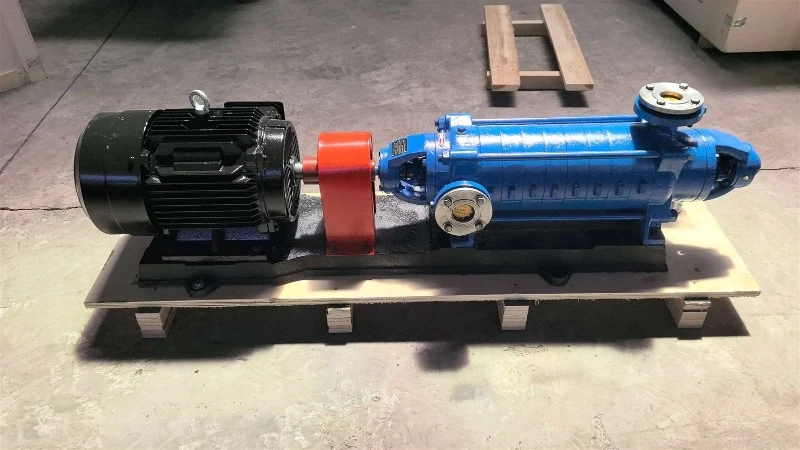
Flow rate at the required head
Pump efficiency at the operating point
Motor power requirements
Permitted operating range
Maximum working pressure
Available NPSH and system suction conditions
For applications with changing demand, consider whether the pump will operate efficiently across the expected range.
5. Check Liquid Properties and Materials
Many multistage pumps are designed for clean water or liquids with similar properties. Other liquids may require a specialized design.
Before ordering, confirm the liquid's temperature, viscosity, density, chemical composition and solids content.
Material compatibility is especially important for corrosive liquids or applications with elevated temperatures.
If the application involves abrasive particles, dirty water or thick liquids, verify that the selected pump design is suitable rather than assuming that a standard clean-water multistage pump will perform adequately.
6. Calculate Motor Power Requirements
Motor power depends on the required flow, total head, liquid density and overall pump efficiency.
For a water-like liquid, hydraulic power can be estimated using:
Hydraulic Power (kW) = ρ × g × Q × H / 1,000
where Q is expressed in m³/s and H is expressed in meters.
The required shaft power is greater than the hydraulic power because of hydraulic and mechanical losses.
Motor sizing must therefore be checked against the actual pump performance curve and the manufacturer's recommended operating conditions.
Also confirm the available voltage, frequency, phase, starting method and installation environment.
7. Review Installation and Maintenance Requirements
Multistage centrifugal pumps are available in different configurations, including horizontal and vertical arrangements.
The appropriate configuration depends on available space, suction conditions, piping layout and maintenance access.
Before installation, review:
Suction pressure and NPSH requirements
Pipe alignment and support
Foundation or mounting requirements
Seal and bearing maintenance access
Operating temperature and pressure limits
Electrical protection and control requirements
Proper installation helps reduce vibration, leakage and unnecessary mechanical stress.
8. Common Multistage Pump Selection Mistakes
Choosing by maximum head alone: The pump must also deliver the required flow at the operating point.
Ignoring suction conditions: Inadequate NPSH can contribute to cavitation and performance problems.
Oversizing the motor or pump: An unsuitable operating point may increase energy consumption and operating costs.
Ignoring liquid compatibility: Incorrect materials can lead to corrosion or premature component damage.
Failing to check maximum pressure: The pump, seals, piping and other system components must be suitable for the expected pressure and temperature.
9. What Information Is Needed for Pump Selection?
To help a supplier recommend a suitable multistage pump, prepare: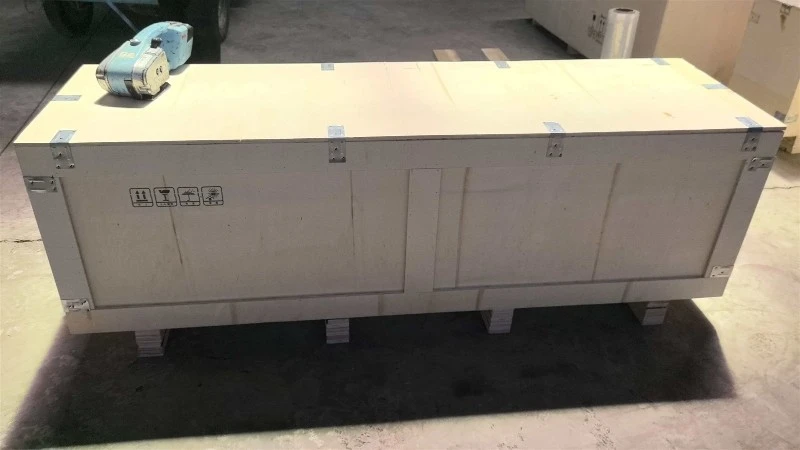
Required flow rate in m³/h
Total dynamic head in meters
Liquid type and temperature
Suction pressure or water-level conditions
Required inlet and outlet connections
Available voltage and frequency
Installation configuration
Required materials and operating schedule
If you have an existing pump, provide its nameplate and performance curve where available.
Conclusion
A multistage centrifugal pump can be an effective solution for applications requiring relatively high head, but the correct selection depends on the entire pumping system.
By evaluating flow rate, total head, pump efficiency, liquid compatibility and suction conditions, buyers can make a more informed decision and reduce the risk of selecting unsuitable equipment.
Need a multistage pump for your industrial application?
Contact our team with your required flow rate, total head, liquid properties and power supply. We can review your operating conditions and help identify a suitable multistage centrifugal pump.