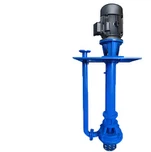
I. Application Scope of Mud Pump
The mud pump has the advantages of high efficiency, smooth operation, reliable performance, convenient maintenance, and small floor space. Since the mud pump has so many advantages, do you know its application scope? If not, then the following will introduce the application scope of the mud pump to you.
1. In rural areas, it is mainly used for transporting and spraying river mud, manure, river water and slurry feed, replacing manual carrying. It is also used for drainage and drought resistance. It can also be used for producing organic fertilizers such as pond mud and river mud, and can also be used as a simple mobile fire pump for rural areas.
2. It can be used in industries such as municipal services, chemical engineering, dyeing, medicine, shipbuilding, foundry, food, etc. for extracting thick liquids, turbid liquids, pasty substances, flowing sands and flowing sludge in urban rivers. It can also be used to remove fluid containing small stones and mud clumps from coal mines.
3. If combined with high-pressure water pumps and water guns to form a hydraulic mechanized earthwork engineering unit, it can be used for land leveling, dredging of rivers and ponds, excavation and transportation of earth in small-scale water conservancy projects such as those for flood control and underground works in cities.
4. Fish farming is used for purifying water in ponds and improving oxygen levels in fish tanks.
II. Safety Precautions for Mud Pump Usage
The slurry pump can be used in industries such as municipal services, chemical engineering, dyeing, medicine, shipbuilding, casting, food, etc. for suctioning thick liquids, turbid liquids, pasty substances, flowing sands and flowing sludge in urban rivers. So, when using the slurry pump, what precautions should be taken? Next, we will introduce the usage precautions of the slurry pump for you.
1. When the medium contains a large amount of weeds, iron wires, wooden strips and other impurities, please add a filter screen at the suction inlet to prevent the impurities from damaging the impeller.
2. After use in scenarios such as sludge suction, it is necessary to provide short-term water absorption to facilitate the flushing of the pump body and pipelines.
3. After the pump has been in operation for approximately 1250 hours, it is necessary to disassemble and inspect it for maintenance. If necessary, replace the worn-out or damaged parts that are no longer suitable for use.