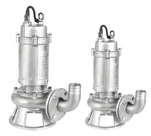
Water pump energy-saving technology
Water pump energy conservation is an energy-saving method that reduces the energy consumption of pump operation and improves energy efficiency through technical means. It is mainly applied in industrial fluid transportation and property equipment management fields. The core lies in optimizing the operating efficiency of the unit, involving equipment renovation, system regulation and management strategies. This technology initially used valve control, introduced variable frequency speed regulation technology in the 1980s, and later developed into an intelligent control system integrating PLC and human-machine interface after the 1990s. Its energy-saving mechanisms include variable frequency speed regulation, power factor compensation and soft start [1].
Key technologies include reasonable selection (matching head and flow), dynamic configuration of pump groups (peak shaving and valley filling strategies), and variable frequency speed regulation (adjusting speed to reduce power consumption) [1]. Case studies show that by adjusting hydraulic balance and using customized high-efficiency pumps, the pump efficiency can be increased from 75.3% to 90.2%, and the annual electricity savings reach 2.4756 million kilowatt-hours [2]. The intelligent system solves the problem of non-standard operating conditions through adaptive variable pressure technology and realizes a 10% to 30% electricity saving rate for variable frequency pumps and 30% to 75% for non-variable frequency pumps through cloud monitoring. Currently, this technology is included in the national energy-saving key areas, and its electricity consumption accounts for approximately 20% of the total national power generation.
The second is to enhance the control level. This is something that using units often apply. The earliest control method was to reduce power consumption by closing valves and lowering output. Later, in the late 1980s, our country introduced the "frequency converter" control technology. At this time, the water pump energy-saving technology made a breakthrough. By the end of the 1990s, "water pump energy saver" control technology had spread all over the country like bamboo shoots after rain. Counterfeit products also flooded the market, such as devices that interfere with electricity meters and those that operate at reduced pressure, etc.
After the new century, the truly "water pump intelligent control system" is no longer an evolution of the "frequency converter" control technology. While effectively utilizing the frequency converter, the water pump energy-saving control technology also incorporates PLC, human-machine interface, filtering, etc., all of which are included, making the water pump energy-saving more scientific and intelligent.
The energy-saving principle of the variable frequency speed regulation energy-saving device
Variable frequency energy saving
According to fluid mechanics, P (power) = Q (flow rate) × H (pressure), the flow rate Q is directly proportional to the first power of the speed N, the pressure H is directly proportional to the square of the speed N, and the power P is directly proportional to the cube of the speed N. If the efficiency of the pump is constant, when the flow rate needs to be adjusted downward, the speed N can decrease proportionally, and at this time, the output power P of the shaft follows a cubic relationship decline. That is, the power consumption of the pump motor is approximately in a cubic ratio relationship with the speed. For example: a pump motor with a power of 55KW, when the speed drops to 4/5 of the original speed, its power consumption is 28.16KW, saving 48.8%, when the speed drops to 1/2 of the original speed, its power consumption is 6.875KW, saving 87.5%.
Power factor compensation energy saving
Reactive power not only increases line loss and equipment heating, but more importantly, the reduction of power factor leads to a decrease in the active power of the power grid. A large amount of reactive electrical energy is consumed in the line, the equipment utilization efficiency is low, and the waste is serious. According to the formula P = S × COSФ, Q = S × SINФ, where S - apparent power, P - active power, Q - reactive power, COSФ - power factor, it can be seen that the larger the COSФ, the larger the active power P. The power factor of a common pump motor is between 0.6 and 0.7. After using the variable frequency speed regulation device, due to the internal filtering capacitor of the frequency converter, COSФ ≈ 1, thereby reducing reactive power loss and increasing the active power of the power grid.
Soft start energy saving
Because the motor is directly started or Y/D started, the starting current is equal to (4-7) times the rated current. This will cause serious impact on mechanical equipment and the power supply grid, and it also requires an excessively high power supply capacity. The large current and vibration generated during startup cause great damage to the baffles and valves, which is extremely unfavorable for the service life of the equipment and pipelines. However, after using the variable frequency energy-saving device, by using the soft start function of the frequency converter, the starting current starts from zero and does not exceed the rated current at its maximum value, reducing the impact on the power grid and the requirements for power supply capacity, and extending the service life of the equipment and valves. It also saves equipment maintenance costs.